Michael Crooke = Sapoty Brook


Eco-eating
 

Testimonials | CaPNaK_Chart | Links
Refrigeration and Glyconutrition  |  Raw Ramblings

Go To eco-eating Products

Email Me

A bodybubble is for rocking, reclining, and bodywork


Please let me know about bad links you encountered on other sites while trying to get here.

Thanks.

Put your baby to sleep in a bed-womb! Happy Hangup


eco-eatingComing Soon!
Eco-eating Experiential Raw Food Training DVD Set

Click here if you want me to email you when Training DVD's are in stock

Read this webpage and you will learn about:
What is Eco-Eating?
My Background
Mineral Balancing
The CaPNaK Chart
Food Groups
Symptoms of Food Imbalancing
Benefits of Intentional Imbalancing
How to Eat a live or raw food diet in a healthy way
Core Raw Diet
The Five Basic Rules of Raw Eating
Food Combining and other issues
Food Chakras
Raw Benefits

There are no links for the headings above because I want to encourage you to read this page from beginning to end.

What is Eco-eating?

ECO-EATING is the know how to select foods to create the body and mind you want, and reach optimum health without cooking.

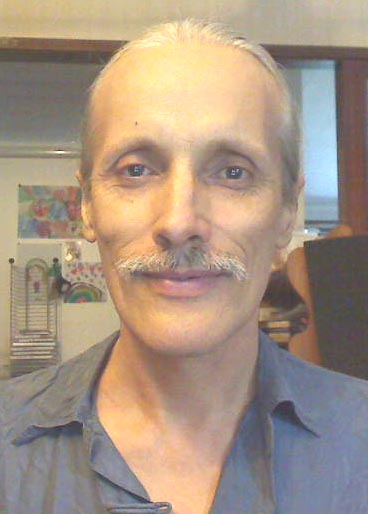
My name is Sapoty Brook and I'm hoping that what I've to tell you now will transform your body and mind. It can help you heal yourself, and heal the planet.

For now I'm willing to call myself a Rejuvenation Consultant. I'm interested in rejuvenating you and, through rejuvenating you, helping the planet and the environment.

My Background

My university degrees are in science and electrical engineering with a master of science degree in neural modeling . I've also worked and lived for 25 years with the live or raw food approach to eating and have written the book titled "eco-eating".

How do I go about applying the idea of eco-eating in my life?
We will get to that soon. First of all I must describe a little background detail to make sure that you understand the process behind the eco-eating way. This will be divided into two parts.

The first part describes the methods and benefits of mineral balancing, and how to use it in your life to help you achieve optimum health and create the body and mind you want.

The second part describes how to apply mineral balancing to a live or raw food diet and how to eat a raw food diet in a long term healthy way, easily without any problems or difficulties.

However, let me say at the beginning that what I'm about to describe is a demanding and intensely transforming practice. You may find at first that you have difficulties in applying what I have to say, but as time goes on, its like driving a car, you'll find it easier and easier, and eventually you'll find it so easy that you'll wonder why everyone isn't doing it!

Its of the utmost importance however that anyone with any doubts about their physical condition must follow these guidelines only under medical supervision - that especially includes pregnant and breast feeding women, small children or the sick or elderly. Its also important to maintain a good exercise program that keeps your blood flowing and the tissues oxygenated.

From an emotional and spiritual point of view its very difficult to apply the information if there is a backlog of unprocessed emotions in your mind. So I would suggest that anybody who feels on the edge emotionally at all, should either find some counseling or do some breath work and meditate . I highly recommend that you practice meditation daily to provide a stable basis for the application of this system and method of eating.

The information here is based on my book "eco-eating". "Eco" relates to ecological and its important to realize that the ecological benefits of this diet and approach are just as significant as the health benefits. Your garbage and energy used in the kitchen and in the production of your food will be reduced to an absolute minimum and this will have great benefits for the environment especially if its adopted by many many people.

Mineral Balancing

Now, the first of the two main parts of this information page is on mineral balancing. I developed a CaPNaK' chart for the understanding of this. The name CaPNaK is a conglomeration of the abbreviated names of the minerals shown on the chart. You can see here below an illustration of the chart for a clearer understanding of what I am describing.

CaPNaK ChartThe CaPNaK Chart

In case you need to refer to it, click on this blurred copy of the CaPNaK Chart to open it in a new window.

You can buy a clear copy of the CaPNaK Chart either as an image sent by email or as a printed colour poster. See the bottom of this page.

I developed the CaPNaK Chart after several years of working with a raw food diet, experimenting and trying to optimize a raw food diet and finding difficulties in achieving balance. Then, when I eventually discovered how to achieve balance in the raw food diet, I found that I was confronted by a lot of people who really and truly believed that this was impossible. So the CaPNaK Chart came out of this confrontation.

The basic idea is that in food there are four main minerals: sodium, potassium, calcium and phosphorus. These minerals occur in much larger quantities in food than the other minerals, and they have very very significant and ubiquitous effects on the body and mind.

With these four minerals its well known that sodium and potassium can be seen as a balancing pair as they both play a very important role in the fluid balance in the body.

There is more sodium outside the cells and more potassium inside the cells and so the amount of fluid distributed between the inside and outside of the cells is influenced by this sodium/potassium balance.

Other factors influenced by the sodium/potassium balance are, for example, muscle contraction and nerve transmission, - so these two minerals are very fundamental to the body and mind.

The other two minerals, calcium and phosphorus are also in balance. Phosphorus in the form of phosphates has a major acidic affect on the body, whereas calcium is the major alkaline mineral.

Calcium stored in the bones is the alkaline buffer for the body. When the body is overloaded with acid
foods some alkaline calcium is withdrawn from the bones to help re-balance the acidity of the phosphates and restore the body to acid/alkaline balance.

Slight disturbances in the balances of both these pairs of minerals have big effects on the body and mind.

I wanted to express these balances graphically so that it would be very accessible to you in terms of understanding and achieving rebalancing of the minerals in your body. Now, the problem I ran into, of course, was that there are four dimensions here - the four minerals require four dimensions - so graphically speaking its impossible to display these four dimensions.

So the approach I took was to take into account the balanced ratio between the two pairs of minerals. This then enabled me to take each food and subtract out the balanced ratio for each pair of minerals. This left the remaining residual amount of mineral that created an imbalance.

For example consider a banana - a banana is high in potassium and low in sodium. A certain balanced ratio between potassium and sodium is fairly ideal for the average body and if that's taken out of the banana then there is an excess of potassium left over.

So if I then show on the Chart how much potassium is left over it gives a clear indication of the imbalancing effect of the banana. That excess potassium must be dealt with in some way otherwise it creates symptoms and effects in the body mind.

This way I reduced the graph to two dimensions. I plotted the positions of the foods according to the residual amounts of minerals remaining after the balanced amounts of calcium-phosphorus and sodium-potassium were taken out.

I was then able to plot two directions on the Chart and therefore show the unbalancing effect of each food by its position or distance and direction from the centre of the Chart.

So once armed with this basic concept I went to the food composition tables provided by various governments and other scientific groups. I took the average mineral contents of each food and put the data through my computer and determined the position of each food on the chart. Hence I was able to construct the CaPNaK Chart.

That was 10 years ago now, and since then I and many other people have been using the CaPNaK Chart and finding great benefits from understanding what effect particular foods are having on the body and mind.

You will notice if you look at the CaPNaK chart that there are four colours. The colours indicate where each mineral predominates. For example, in the blue area the calcium dominates and therefore the foods are mainly alkaline, in the yellow area the sodium dominates and the foods are mainly Yang.

In the area between the blue and the yellow you would call the foods Yang/Alkaline so neither is dominant.

You will see a rectangular area of a different shade around the center. Any foods outside that area have been squashed in towards the center so that they fit on the chart. For those who understand, the scale is linear inside and logarithmic outside the rectangular area.

I've taken the liberty of associating Yang with sodium and Yin with potassium as a means of bridging the gap between the scientific nutritional approach and the eastern style approach to nutrition, especially macrobiotics.

However there are some foods which are not positioned according to how one would expect from a macrobiotic viewpoint. In this case I've leant towards the scientific approach because of its fundamental foundation in the atomic understanding of matter.

Food Groups

Now if you look carefully at the Chart, for example look in the bottom left hand region in the Yang/Acid area, many meats and fish are grouped together in that area.

Different food groups tend to group in different areas in this chart. So by knowing where the different food groups are located you'll be able to start to understand the different effects of the food groups on the body and mind.

For example nuts, grains and legumes are mainly located in the lower right hand region, in the Yin/Acid area.

Fruit, you'll notice, is located just right of the center in the Yin or potassium direction, and dairy products are located in the upper left hand region, in the Yang/Alkaline direction.

Seaweed and also some green vegetables are located in that area as well. There are also many green vegetables in the upper right hand area, in the Yin/Alkaline direction.

Foods stay in approximately the same position whether or not they are organic.

Foods are shifted around the chart by additives. For example whole meal bread is in the Yang/Acid region even though wheat is in the Yin/Acid region. Why? Because sodium salt is usually added to the dough.

Similarly white bread is above whole meal bread on the chart because the milk solids add more calcium than phosphorus.

You will also notice that tea, coffee, white sugar and oils are at the center of the chart. They provide no residual minerals because they contain almost no minerals. This does not mean they are healthy. They are unhealthy for other reasons than their mineral content.

Symptoms of Food Imbalancing

I supply along with the chart a Symptoms Diagram and a Benefits Diagram. You will notice at the centre of the Symptoms Diagram and Benefits Diagram the same four directions that are shown on the CaPNaK Chart, calcium, phosphorus, sodium and potassium and these are in the same directions as they are on the chart. See the example below for a clearer understanding of what I mean.

On the Symptoms Diagram there are various symptoms listed for being imbalanced in each mineral direction.

Taking the opposite pairs of symptoms for example the pair for calcium and phosphorus, you'll be able to see that there are some opposite or complementary effects.

For example the calcium foods will having a calming affect on the body, in overdose, making you excessively calm, tranquil, lazy, or careless.

Whereas the excessive phosphorus foods will have the effect of making you anxious, paranoid, restless, or worried. That can be good to a certain extent but when taken too far can have negative effects on your body and mind.

Due to our conditioning and cravings, almost all of us are in some ways out of balance in regard to these four main minerals and therefore we all tend to have some symptoms.

So we can all benefit by checking out the Symptoms Diagram and finding out where our symptoms tend to lie. Now some of our symptoms will be always present, and some will be sometimes present and sometimes not.

So first of all, the idea is to find which symptoms are the most pervasive ones for you and which direction tends to be the most important for you to try to rebalance.

Say for example you find that you often feel very cold and have bags under your eyes and maybe some swelling of the ankles. Then you could conclude that you have got symptoms reminiscent of an overdose of sodium or an under dose of potassium. So by eating more foods in the potassium direction you would rebalance that.

For example, Referring to the food chart look at foods in the potassium direction. You could choose bananas for example as a good food to reduce those symptoms of sodium overdose and potassium under dose.

The other way you can approach the problem is also to reduce the high sodium foods that you may be eating. For example you may be eating too much cheese or too much meat which you'll see on the Yang side of the CaPNaK Chart.

Lets say tomorrow you eat too many bananas, say you eat four bananas in a row. You may get a bloated belly, indigestion, feel faint and dizzy. These are Yin overdose symptoms.

What will you do? You'll need an antidote. So you run your finger across the chart from bananas through the center to the diametrically opposite side.

Look for a healthy raw food in that region, for example celery is ideal. Three sticks of celery will balance up the bananas, and half an hour later your negative symptoms will be gone.

When you get the Symptoms Diagram its worth taking some time out now now and to have a look at the negative symptoms and find out which direction you think you've gone too far in.

You may find that there is one particular direction of the sodium/potassium balance and one direction of the calcium/phosphorus balance and you'll get the idea that you have eaten too far into one region of the chart.

So have a look at the foods in that region and consider what times you might eat those sorts of foods and whether you tend to get more of those negative symptoms at those times or soon after those times.

And look at the foods in the opposite region, diametrically opposite through the centre of the Symptoms Diagram, and you might find a lot of foods you don't have much affinity with - that you dont enjoy very much.

So the idea here is that we have to use our intellect to overcome our conditioning and preferences which have been instilled in us since childhood from our parents and our culture.

Benefits of Intentional Imbalancing

That's a look at the negative effects of foods. Conversely, there are corresponding positive effects and they are shown on a corresponding Benefits Diagram I supply in my cassette package or with the chart itself. The Benefits Diagram has the same four directions from the centre corresponding to the four main minerals. On the Benefits Diagram you would see the positive effects listed around the outside.

For example, if you wanted to do some sport, say yoga, then up in the alkaline direction towards the top you'll see the second line from the top says "helps you relax and become tranquil".

Well, that would be good preparation for doing yoga wouldn't it? So you could eat foods in that direction a couple of hours before doing yoga.

Also, eating over in the right hand side, the Yin or potassium side, you'll see about fourth point down "loosens up your body". So eating in the potassium or Yin direction would be a good idea to prepare for yoga as well: help you stretch into those assanas.

So eating in the calcium/potassium direction or the Yin/Alkaline direction, in other words in the upper right area would be good preparation for yoga.

Look at the Yin/Alkaline region of the CaPNaK Chart and see that you could, for example, have a salad with chives, okra and broccoli in it. Or a little bit closer to the centre you'll see oranges, so you could have a couple of oranges.

The further the food is from the centre the faster it will take you into the particular mind body state associated with that direction from the centre.

Each direction from the centre: up, down, left, right or the oblique directions, has a corresponding mind/body state.

For example, foods down in the bottom right hand region will put you into a studious thinker type personality and even a thinker type body if you eat them long enough.

Foods in the bottom left hand region will put you into a gung-ho workaholic state for getting things done.

And foods in the top left hand region will put you into what I would call party-animal mode, where you can really have a good time at parties and be more social and outgoing.

And foods at the top right hand region will put you into what I would call care-bear mode, where you would make a good listener or carer.

So you can experience how foods can influence the mind state as well as the body state. And you can start to use the foods to put yourself in the right frame of mind for whatever activity you want to be engaged in.

You can also use the chart to create warmth or coolness in your body. For example, if you have got to work hard on a hot day then on the positive effects list on the left hand side corresponding to sodium you'll see it says "cools you down".

So if you look at the corresponding sodium direction on the CapNaK Chart , celery, for example, could be used to cool down on a hot day, and conversely bananas over on the right hand side, high in potassium, will warm you up.

You can imagine that your current body-mind state is at a particular point on the chart. You might describe yourself as a bit Yin/Alkaline for example. The foods you eat move your body-mind state around the chart. You can choose which way to go.

Another important point for our times, considering the runaway obesity of western society, is the fact that the foods in the calcium direction will help you gain wait and the foods in the phosphorus direction will help you lose weight.

So by eating low calorie - low kilo joule - acidic foods you can help your body lose weight.

For example, looking at the CaPNaK chart green peppers, cauliflower, mung sprouts, asparagus, brussels sprouts, peas and mushrooms are foods all reasonably low in calories and have an acid residue in the body. Therefore they reduce the ability of the body to absorb and hold fat.

This is because calcium in the intestine and blood stream helps the body absorb fat from the intestines and deposit it into fatty tissue. So the slight absence of calcium makes it more difficult for the body to retain or gain weight.

So here again it's worthwhile to sit down and study the positive effects that you can create in each direction. Take time to think about what you do in your life and how you can use your food to enhance your performance in whatever you do.

That concludes the general discussion of the CaPNaK Chart. Now I want to proceed to how to eat a live or raw food diet in a long term healthy way.

How to eat a live or raw food diet in a long term healthy way.

Why would one bother going against the mainstream attitudes and try to eat a predominantly live raw food diet?

First of all, lets look at the problems of our society in terms of health. Billions of dollars are being spent on health every year. Many people are having enormous health problems and spending a large proportion of their income and tax on maintaining their health, whether it be through herbs, supplements, all the way through to drugs and eventually to surgery.

Now, the US Surgeon General, who would be considered to be the No. 1 doctor in the world, has publicly stated that 70% of diseases are nutritionally related.

These are the words of an incredibly conservative member of the establishment. Even he is saying
that 70% of all diseases are nutritionally related.

So, that gives us the option of reducing our disease rate enormously if we can improve our nutrition.

You will probably be familiar with the fact that over the last couple of decades there has been a real drive to reduce the amount of fat that people eat in their diet.

The "sad diet" or the standard Australian diet is essentially, about, 50% fat intake. The other extreme was created in the well known Pritikin diet which recommended only about a 10% FAT intake.

Current government recommendations are to eat about a 30% fat intake and some heart and diabetes groups recommend about 20% fat intake. There is also the recent Zone diet which recommends a 30% fat intake.

The basic approach to almost all these lower fat diets is to say that people should move onto more carbohydrate in their food rather than the protein foods which tend to carry the saturated fats and cholesterol along with them.

Also, another reason for moving onto the carbohydrates is to provide a nice clean source of fuel for the body in the form of carbohydrates.

Carbohydrates don't produce the same acidic effects which a high protein intake has on the body due to the nitrates and uric acid formed by protein metabolism.

However when we look at the CaPNaK Chart we see that the high carbohydrate foods tend to be down in the lower portion of the chart in the acid area.

This is very important because it's well known that acidity in the diet leaches calcium from the bones and will contribute to osteoporosis. Osteoporosis is a growing plague in our society and should be taken seriously by everybody.

People in high grain eating societies such as the Japanese have a long history of fear of osteoporosis in old age. A lot of Japanese men are very frightened that they will slip over during their walk home from the pub and break their pelvis and have real problems.

The solution is not to go back to a high meat diet because meat is equally as acidic in terms of the calcium/phosphorus balance, but even more acidic in terms of the high protein content, creating extra acidity.

So when we are faced with this question of osteoporosis we have to look outside the conventional meat-grain-beans type of approach to eating.

So would we move to dairy products? Well, OK, everybody knows that dairy products are high in calcium but actually the high protein in dairy products has an acid effect and reduces the alkaline/calcium benefits of the dairy products. This applies particularly to adults who do not utilise much protein for growth.

Also, dairy products tend to stimulate excretion of a lot of mucous in the digestive tract, especially the nose and throat, providing a breeding ground for various bacteria and viruses, and contributing to colds and infections.

Dairy products also tend to create allergic reactions, and many people are lactose intolerant especially as they get older, as they move out of childhood.

However, if you look at the CaPNaK Chart there are some green vegetables that are higher in the Alkaline direction than dairy products.

For example, just above dairy products there are spinach, kale and silverbeet. So these green vegetables, when eaten in sufficient quantities, are an excellent replacement for dairy products in the diet as a source of calcium.

There are also many other high calcium green vegetables you can use, which are not so Yang, such as broccoli and okra. See the Yin-Alkaline quadrant of the CaPNaK chart.

After all that putting down of meat and grain, beans and dairy products, you might be wondering "well what can I eat to get some energy?".

Obviously vegetables don't contain enough energy to enable you to thrive. So there is only one option left for getting the energy and that is fruit.

Food Chakras

Before we look more closely at fruit, I want to talk about the different levels of nutrition.

Its important to realise that different practitioners have different views depending on their basic approach to nutrition. To provide a map so you can understand where people are coming from, I've developed a set of seven levels which I call the food chakras.

Starting with the lowest those levels are:
Junkivore- in other words a junk food eater.
Carnivore- avoiding junk food but eating a lot of meat.
Piscavore- avoiding meat and eating a lot of fish or poultry.
Vegetarian- avoiding flesh and tending to eat a lot of grain and dairy products.
Macrobiotic- shying away from dairy products but still heavily into grain and beans.
Vegan- renouncing animal products, eating more fruit and salads in the diet than the macrobiotic, but still eating cooked foods daily.
Symbiotic - which is a raw food eater who eats mainly fruit as the major source of energy, and usually eats raw vegetables, nuts and seeds.


Now, as we progress up these levels we actually do have to give up certain foods or reduce them down to a minimum in our diet. For example, someone who is a macrobiotic has stopped eating red meat.

This process of moving up the food chakras is abhorrent to many people because it means giving up some foods that they currently enjoy and are used to eating.

But the essential point is that, in this process of giving up something that we enjoy in the short term, we get enormous benefits in the long term. We experience greater health and longevity, and generally enjoy life more due to our state of health.

Its a case of giving up a short term pleasure for a long term benefit. So if you are not willing to give up the short term pleasures for long term benefits then perhaps what I have to say is fairly irrelevant to you.

However as people mature they tend to realise the importance of this approach. So they are the people that this information is directed to. Are you one of them?

Raw Benefits

Getting back to the raw food approach, the idea is that you get your major source of energy from fruit. I recommend that 70% of the diet, say 7 serves out of 10 would be fruit and 25% of serves would be greens, green leaf vegetables. The remaining 5% would be nuts, seeds and perhaps a very small quantity of animal products.

The first thing that comes to peoples minds when they hear about this sort of approach is "there is too much sugar in all that fruit - it's terrible".

You have got to remember that the sugar in fruit is not sucrose. It is fructose, which has a much more gentle effect on the body and bloodstream - it comes into the bloodstream much more slowly.

Also the sugars in fruit are mainly bound into the cellular structure so, again, they are released slowly and gently into the blood stream. The beneficial cellular structure of raw food is destroyed by cooking.

Slow release of sugars from raw food keeps your insulin level low. This is a major health benefit also aimed at by the popular, but higher protein, Zone diet.

Another way to keep the blood sugar stable and insulin level low is to graze. Forget the 3 meals a day
belief system. With the raw food approach 6 to 8 meals a day is much better. Eat a sweet or savory meal depending on your taste at the time.

It's important to realise that one of the major reasons for moving into a raw food diet is because any cooking, any heating of any foods above 50 degrees centigrade or half way to boiling point destroys the enzymes in food.

The enzymes in food are very important because they actually help you digest the food.

Now if you destroy the enzymes in food then the body has to produce all the digestive enzymes and acids that are required to digest the food. This puts a big load on the pancreas and stomach.

So when we take the load off the pancreas and stomach we are actually taking the biochemical load off the endocrine system. Since the endocrine system is also responsible for the immune system, for immunity, we actually allow some of that biochemical energy to be redirected from digestion over towards immunity. Hence our immunity escalates much higher on a raw food diet.

Some people reduce cancers and eliminate cancers from their body while eating the raw food way. Perhaps their immune systems become strong enough to destroy cancer cells. In addition to reducing the risk of osteoporosis, improved resistance to infection and cancer are other likely long-term health benefits of a raw food diet.

Some people prefer to follow their instincts in choosing raw foods. This can be assisted by touching and smelling the available foods. However many people also need to have an intellectual methodology to help over-ride their negative conditioning.

To enable people to move into a raw food diet without any worries about the danger of deficiencies and so on, I've developed a simple diet which I call the Core Raw Diet.

Core Raw Diet

Now the core raw diet consists of 5 bananas, 6 large oranges, 4 sticks of celery, 1/2 kilo of broccoli or equivalent dark green leaf vegetables and 2 handfuls of nuts and seeds every day. This diet is just under 20% fat.

Think of these foods as your staples, just like bread, meat and milk might once have been.

Amazingly, according to food composition data, this diet will give full nutrition to a 70 kilogram person, with the exception of vitamin B12. Smaller people could get full nutrition on less food.

However the Core Raw Diet is low in calories, low in kilo joules so in effect if an active 70 kilogram person ate those proportions of fruits, vegetables and nuts then they would tend to lose weight.

So, on top of the Core Raw Diet, you should add whatever fruits and vegetables you wish to add, especially those that are fresh and in season.

Now, in addition to these five food components there are five basic rules you must follow if you want to be successful in eating the raw food diet.

The Five Basic Rules of Raw Eating

The first rule is to have enough fruit to eat - this is incredibly important! Most people who switch to a raw food diet find it very difficult to eat sufficient quantities initially.

Now that's a great thing because we are all so used to restricting ourselves and not being able to eat this or that and trying to keep our weight down or whatever.

Well, in this case, you can go for it - eat heaps of fruit especially, and its vitally important to eat 5 pieces of fruit before 10.00 a.m. - that will get you off to good start for the day, get your blood sugar level nice and smoothly high, and you'll be ready to zoom through the day.

Morning grumpiness and cravings are often due to low blood sugar, so try to always get yourself off to a good start.

A small person who doesn't want to lose weight must eat a minimum of 12 pieces of fruit a day. By "a piece of fruit" I mean fruit equivalent to a medium sized apple. A big person must eat a minimum of 15 pieces. More if you are active.

The second rule is to eat 1/2 kilo or 500 grams of dark greens. Now thats really important to get your sufficient calcium intake and also iron and many other trace minerals. Considerable protein can also be obtained from dark green vegetables.

The third rule is to eat at least 4 sticks of celery a day. Now this is also very important. 4 sticks of celery a day will give you your basic sodium requirements. Have more on hot days.

If you don't get your basic sodium requirements you'll go Yin and you'll have some high potassium / low sodium symptoms such as weakness, dizziness, fainting, headache or feeling passive.

During the transition to a raw food diet some people experience a cleansing crisis as stored toxins are released from their tissues. The negative symptoms can often be dramatically reduced by eating more salty vegetables such as celery.

So its quite important to keep those 4 sticks of celery going in every day spread through the day, especially around noon, because they are an important cooling food.

And the fourth rule is to have two handfuls of nuts and seeds a day. Now I would particularly recommend men to at least include one handful of green pumpkin seeds because of their high zinc content.

When you are doing a high level of physical activity then you may need to eat 3 or 4 handfuls of nuts and seeds a day to provide a higher fat and protein intake. You must also increase your intake of other raw foods to provide sufficient energy and water etc.

The fifth rule is to have a source of B12 in the diet. After about 5 to 10 years on a very low animal food diet you'll probably run low in your stores of B12. Few people produce enough B12 in their digestive tract to maintain their stores. So its important, I think, right from the word go, to pre-empt that, and introduce some food source of B12.

You can get B12 from animal products such as fish. One or two hundred grams of fish each week is a good idea.

If you don't want to eat animal foods then I would suggest that you try a teaspoon of spirulina every day and/or take a B12 supplement, because it's quite difficult or impossible to get B12 in sufficient quantities from ordinary vegetables.

There are some fermented foods such as tempeh or kombucha that you may be able to get a decent amount of B12 from. It's important to realise that B12 comes in different forms and not all are readily utilised by humans so it's necessary to check your sources.

Think carefully about the B12 issue early on because if you go deficient in B12 then you may suffer nerve damage, brain damage or become anemic. You should also get a B12 check with your doctor every couple of years and take immediate nutritional action if you drop below the medical minimum.

Now returning to the chart with this idea in mind of the high fruit based diet, fruit is slightly Yin of the centre. Almost all fruits clumped very specifically in this area, slightly to the right of the centre.

However rather than worrying about becoming too Yin on a fruit based diet it's possible to balance up a Yin based diet with some Yang raw foods. Celery, which is off to the left hand side in the sodium/Yang area, is ideal for this purpose.

Thats why it's included in the Core Raw diet and also why I suggest that everybody on a raw food diet should eat 4 sticks of celery a day. Alternatively, any of the other Yang greens such as spinach for example are also very good especially considering that they contain a high calcium content as well.

Now it's important to realize that some greens and fruit are Yin/Alkaline so these are important calcium sources as well. So for example Broccoli is a major Yin/Alkaline green vegetable and oranges are an important Yin/Alkaline fruit.

People may be surprised to hear that oranges are alkaline because everyone knows that oranges are so acidic. But it's important to understand that the acidity is in the juice - that orange juice is the acidic component.

So, if you have an orange, try to have the whole orange as there is a lot of alkaline/calcium in the pulp which balances out the acidity of the juice. However, I don't wish to imply that you should eat the peel. It may cause tooth problems.

It's interesting that juice generally tends to be more acidic than the fruit or vegetable it's juiced from. For example you'll see on the chart that carrots are balanced between the acid and alkaline areas, just to the left of the centre in the yang direction. Carrot juice is immediately below the carrots, well into the acid area of the chart.

So it turns out to be a fallacy that Carrot juice is alkaline. Its certainly more alkaline than many seeds and nuts, but it definitely does not have a nett alkaline effect on the body.

Now I don't recommend eating large quantities of nuts and seeds in a raw food diet. Nuts and seeds are quite acidic - they are high in phosphates.

Some people believe that almonds are a good source of calcium. However, the high phosphate content of the almonds means that more calcium is dragged out of the bones, by the phosphate, than is deposited.

So if you want to have a source of fat that is alkaline rather than acidic then the only one that I know of which is viable is unhulled tahini.

Now, unhulled tahini, which is made from unhulled sesame seeds, is above the centre of the CaPNaK Chart right up high in the alkaline area.

And in the opposite direction, down in the acid area, you'll find hulled sesame seeds. So it's important to know that tahini made from hulled sesame seeds is actually a very acidic food, whereas unhulled tahini is a very alkaline food.

So don't use hulled tahini as a way of avoiding osteoporosis, as it will actually contribute to osteoporosis.

You will now understand that in the core raw diet I mentioned earlier, there is an acid-alkaline balance between oranges and bananas, and also between broccoli and nuts and seeds. All these foods are Yin and are balanced by the celery which is yang. So, long-term CaPNaK balance and control can be maintained by eating these foods.

In guiding people on a raw food diet I encounter a few very common problems. I would like to briefly mention those so that as you try the raw food diet you'll bear them in mind and avoid the pitfalls.

Food Combining and other issues

The first problem is bad food combining. If you eat a lot of vegetables and fruit together then you may start to suffer from gas build up in your intestines. Now this is very bad for digestion of food, and reduces nutrient absorption from the intestines.

When a portion of the intestine is filled with gas it means that the intestine wall is not in full contact with the food. This reduces the absorption of nutrients.

So it's very important to avoid creating gas from bad food combining. If you notice excessive gas forming in your intestines then experiment with your combinations of fruit with other foods to find the causes. Unripe fruit such as bananas can also create gas.

Another factor in food combining is that you may eat cake or other grain based carbohydrates from time to time, just due to your conditioned cravings or at a social event. Then it's important to avoid eating any fruit for at least two hours after eating carbohydrate. Then you won't get the fruit mixing with the carbohydrate in the intestines and causing fermentation and gas.

Another problem that people run into is that they go low in sodium. This happens with many healthy diets and not only a raw food diet. People who go off all sodium supplements such as soy sauce, miso, high sodium dairy products and meat, find they start to get the Yin symptoms.

For example, indigestion often occurs when your body gets so low on sodium that the muscles in their intestines can't contract properly. Also water is not well absorbed and diahorrea can occur. It's quite important to avoid this low sodium problem by religiously eating at least 4 sticks of celery a day.

Another problem is that people become low in blood sugar. This happens when they don't eat enough fruit. Often people find that they have difficulty in eating more than about 5 pieces of fruit a day just because of the volume.

So one way you can increase your fruit intake is to decrease the amount of fluids you drink. You can provide all the fluids you need by eating fruit. Remember that the fruit's about 90% water, so if your eating 12 - 15 pieces fruit a day then your getting around 2 litres of water from the fruit!

So it's not actually necessary to drink water at all unless you are in a physically demanding situation or perhaps in extremely hot weather. You can satisfy your body's needs for water by eating a lot of fruit.

That will also reduce the possibility of becoming low in blood sugar. Because the bloodstream gets a constant supply of sugars as the fruit's digested.

Now the indicators to watch for with low blood sugar are that you start to slur your speech, your hands start to shake, or you lose some coherence of thought.

Conversely, a great benefit of a high fruit diet is that thinking can become very clear as a result of the supply of sugars to the brain. The brain is a major burner of sugar in the body.

Another problem that often occurs on a raw food diet is that you start to go low in Vitamin B. This is because you have not eaten enough green vegetables. The broccoli and dark greens are an excellent source of Vitamin B.

So if you start to develop cracked lips, or cracked corners of the mouth, or start to become low in energy, that may be a result of going low in Vitamin B due to not eating enough green vegetables.

Finally a typical problem is getting dry skin. Often this is due to not eating enough nuts and seeds and therefore not getting enough fats in their food intake.

So if you take into account all these problems and take appropriate action as soon as you begin to notice the symptoms then you'll find that you can move into a raw food diet very easily.

You can then start to feel the benefits of raw food in your daily life. You can start to use foods, according to the CaPNaK balance and control principles, to influence your body and mind states to achieve optimum performance in whatever you do.

I would like to conclude by saying that if you want to get more information on these approaches to nutrition, then I suggest you buy my book "Eco Eating - A Guide to Balanced Eating for Health and Vitality". See my products below.

I hope you have gained helpful knowledge by reading the above. If you wish you can make a donation to support this service:

Pay with Paymate Express

Read how others have benefited from eco-eating: Testimonials


Eco-eating Products and Services:

We accept www.PayPal.com and www.Paymate.com. See the Payment Options page link at the bottom of this page.

We prefer direct deposit from Australian residents, but remember you must email us after you have made the payment.
Westpac Bank
Account Name: Bodybubble International
BSB #032576
Account #140635

Please put your name (via online banking) or postcode (via bank) in the comment field.

When you use the Add to Order buttons below you will be transferred to my shopping trolley.
When you press the Checkout or Go To Payments button you will be transferred to Paymate to make your payment securely by credit card. Alternatively you can then go to PayPal, if you wish or do a direct deposit if you are Australian.

A$ means Australian dollars. If you are outside Australia click for the
XE.COM Currency Converter now.

The following items are subject to copyright and may only be copied according to the conditions stated at each item.

Read about the book Eco-Eating
Read about The CaPNaK Chart on a Poster and as an emailed image file (otherwise known as Eco-eating for Ecstasy)
Read about the Chart and Audio CD Package
Read about the Eco-eating DVD
Read about your Email or Telephone Consultation Service

Read about your Email Food Log Analysis
Read about your Intensive Training Retreat Opportunity


The book Eco-Eating

eco-eating
The book has 50 small chapters on eating for different aspects for every day life. For example there are chapters on eating for immunity, eating for digestion, energy, weight gain, weight loss, cooling, warming, eating for the seasons, eating for cravings, addictions, travel, sleep, work, sport, action, sex, eating for the environment, and eating for a new society. These are just a few of the chapters you can read and enjoy. A small version of the CaPNaK Chart and tables of CaPNaK symptoms and benefits are included.

The book is out of print. I have made a replica of the pages as a pdf format file that is available on CD ROM. This is less convenient to read, but you may print out one copy if you wish. Also, having it on CD enables you to search the text. (You may not make copies of the CD)

Price A$24.95 for CD ROM of the book; plus outside Australia: A$5 for postage & handling.

For a secure credit card order use the following Add to Order button to place the order and finalise it with the checkout at the bottom of this page.

Add to Order                Download Table of Contents Free (.doc file)


The CaPNaK Chart on a Poster and as an emailed image file (otherwise known as Eco-eating for Ecstasy)

CaPNaK Chart

The CaPNaK Chart is now available as a jpeg file via email.

The CaPNaK Chart is subject to copyright and may only be copied to the purchaser's computer unless agreed otherwise. Distribution of the CaPNaK Chart is not permitted.

Price A$5.95. This includes an explanation file with symptoms and benefits charts.

For a secure credit card order use the following Add to Order button to place the order and finalise it with the checkout at the bottom of this page.

Add to Order

__________________________________

The CaPNaK Chart is available as a large colour poster. You can laminate it and pin it on your kitchen wall.
This comes with an explanation sheet with symptoms and benefits charts.

Price A$6.95;   plus outside Australia: A$5 for postage & handling. Provided folded flat.

For a secure credit card order use the following Add to Order button to place the order and finalise it with the checkout at the bottom of this page.

Add to Order

__________________________________

The Chart and Audio CD Package

Listen to this explanation of eco-eating on an audio CD. It is packaged with the CaPNaK Chart colour poster, and detailed Symptoms and Benefits Diagrams which give a clearer understanding of the process of Eco-Eating.

Price A$22.95;   plus outside Australia: A$5 for postage & handling.

For a secure credit card order use the following Add to Order button to place the order and finalise it with the checkout at the bottom of this page.

Add to Order


______________________________

The Eco-eating DVD

The Eco-eating DVD is available in PAL and NTSC (USA) formats.

This is a 72 minute videoed talk about eco-eating and includes new information and recent ideas. It is an excellent way to introduce beginners and curious on-lookers to the principles and practices of eco-eating. It contains the most detailed overview of the benefits of the CaPNaK Chart.

     Click on the image to enlarge it.

Price A$29.95;   plus outside Australia: A$7 for postage & handling.

For a secure credit card order use the following Add to Order button to place the order and finalise it with the checkout at the bottom of this page.

Add to OrderDVD>

________________________________________________

Email Consultation Service

Most people find it difficult initially settling into a raw food diet. I would like to help you do this, or at
least help you try raw food. You can consult me by email, my minimum fee is A$20

To pay A$20 by credit card click here and select Shipping to Australia:Add to Order

_______________________________________________

:Food Log Analysis

A great way to learn how to stabilise your raw food diet is to keep a food log. Keeping a food log focuses your attention and awareness on what you eat. You record what you eat, the time you ate it, and how you feel before and after eating.

Email me your one day's food log as an attachment and I will review, analyse and append comments to it . I usually spend at least 45 minutes doing this and charge A$20 (about US$15) per food log per person. Click to download a food log form in Word format .doc)

To pay A$20 by credit card click here and select Shipping to Australia:Add to Order

:

_____________________________________________

Intensive Training Retreat Opportunity

We have a dome in the mountains at our home which we reserve for those wishing to receive training in raw food. We also have a spare room in our house. There is a daily food charge of A$15 and option for 3 hours daily work or further payment of A$15 for accomodation. We recommend a minimum stay of four days to learn the essentials of well balanced eating.

Email Me

________________________________________

Accomodation: (currently not available)

I have a very basic rawfooder's hut (ecome) by the ocean near Coffs Harbour (500 km north of Sydney), which you may wish to rent. If so, please email me to enquire further.

The ecome photos here show a grass floor. That has been replaced with a stone paved floor because I don't get there enough to keep the grass watered. There are still plants growing out of the sloping walls.There is a solar shower and solar lighting. The ecome is submerged below ground level and has a gutter around the edge of the floor which is drained down the hill. There is no kitchen or no interior walls. Grapes and passion fruit hang from the roof inside.The double bunk bed and bookshelf hangs from the rafters so that white ants cannot get to it. The toilet is composting and there are fruit trees in the garden area. The ocean and surf is five minutes walk away. The ecome is on an alternative community of about 150 people and is surrounded by a national park.


________________________________________

Thank you for reading. I wish you a long and fruitful life.
Sapoty Brook

Click Here to Checkout and Submit your Order,

Or Click Here to see the Payment Options.

© Sapoty Brook, 1999-2006.
May be downloaded from the web, but not copied in any other way
without written permission from the author.


Australia's source of raw food forums, juicers, dehydrators, raw food books, DVD's, blenders, raw food recipes and more!